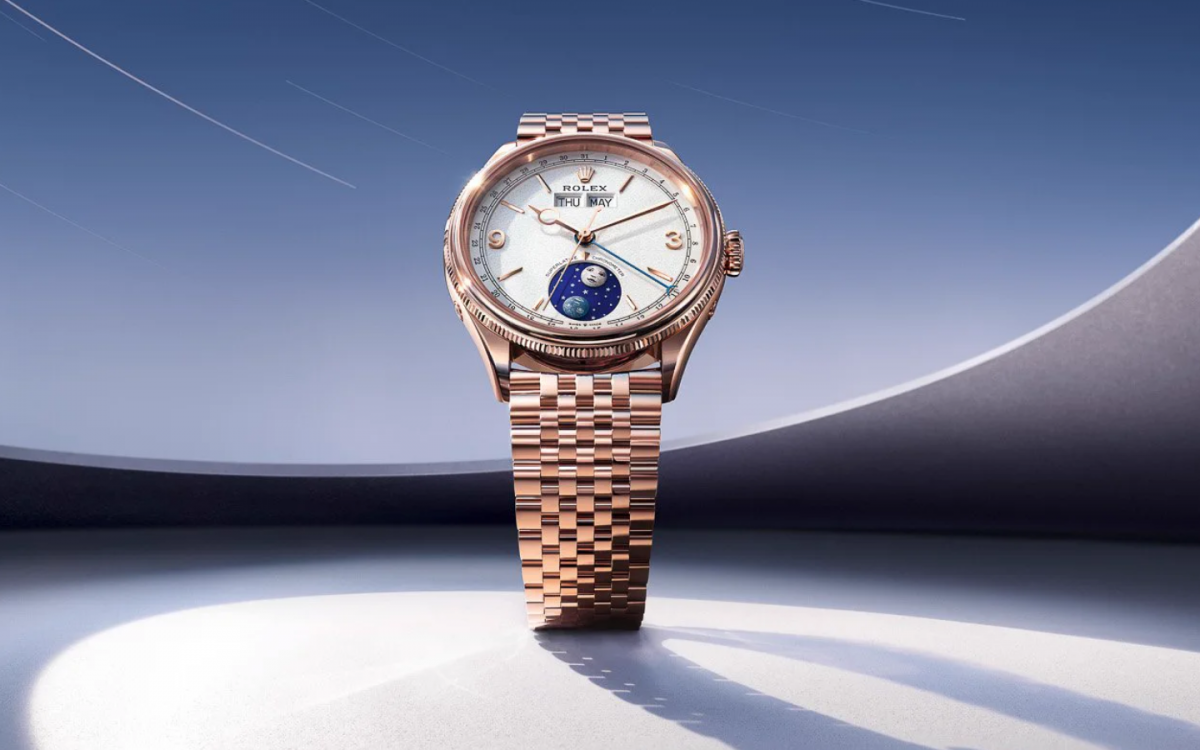
Rolex doesn’t usually give us much time to get used to a new complication.
For years, the brand has been very comfortable with familiar territory. Submariner, GMT-Master II, Daytona, Datejust, Day-Date – the names change here and there, but the basic formula is remarkably consistent. That’s one reason the arrival of the Rolex Perpetual Padellone in 2026 caught my attention.
This isn’t simply another variation on an existing sports watch.
The new Padellone takes the relatively young Rolex 1908 collection and gives it a considerably more complicated personality: an annual calendar, moonphase, pointer date and a new high-frequency movement, all inside a 39mm dress-watch case.
There is also a nice piece of Rolex history behind the name.
And, honestly, that’s probably the part of this watch I find most interesting.
The Padellone Name Comes From an Unusual Rolex
“Padellone” is an Italian nickname for a large frying pan.
It sounds almost ridiculous until you see the vintage watch that inspired it.
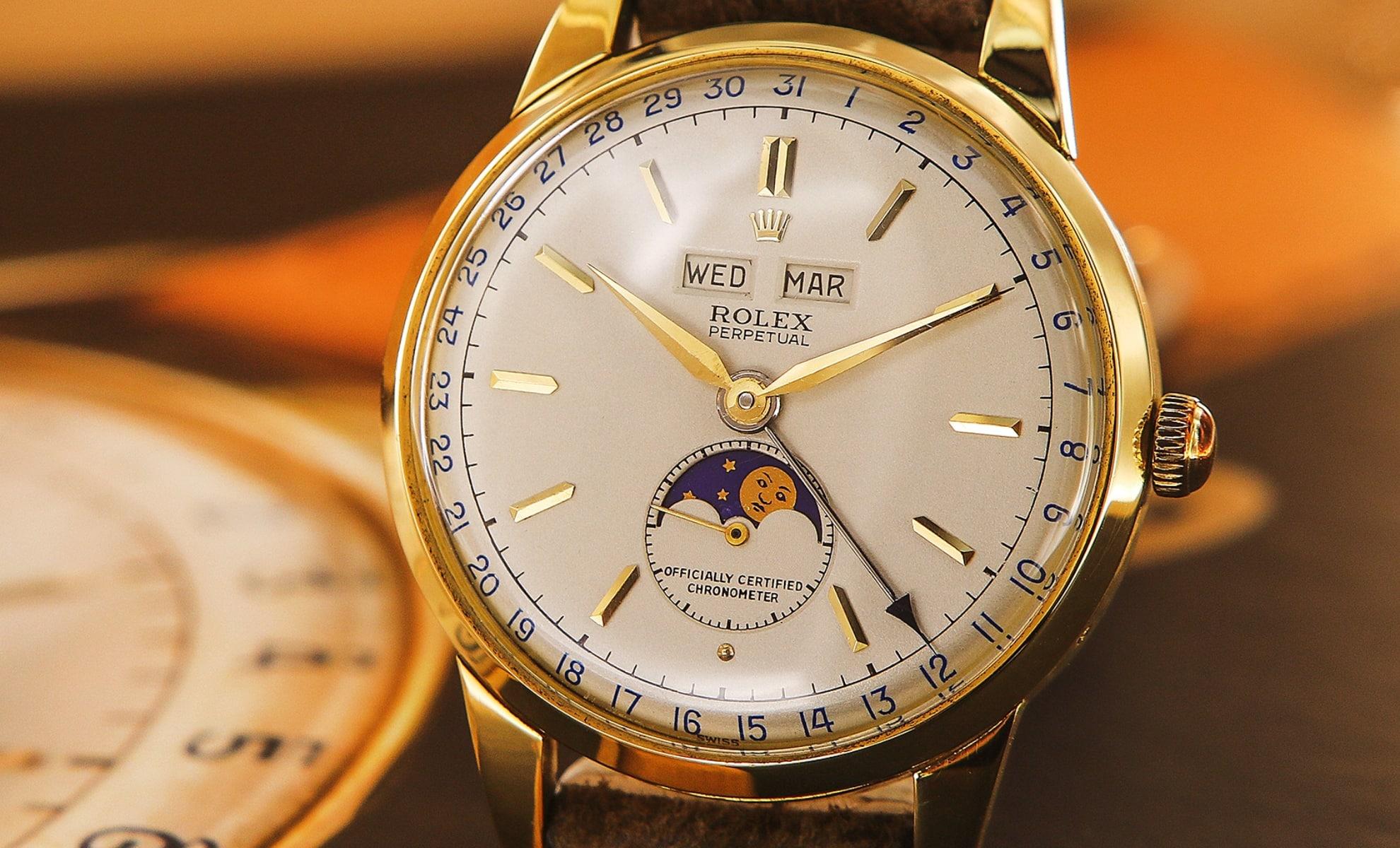
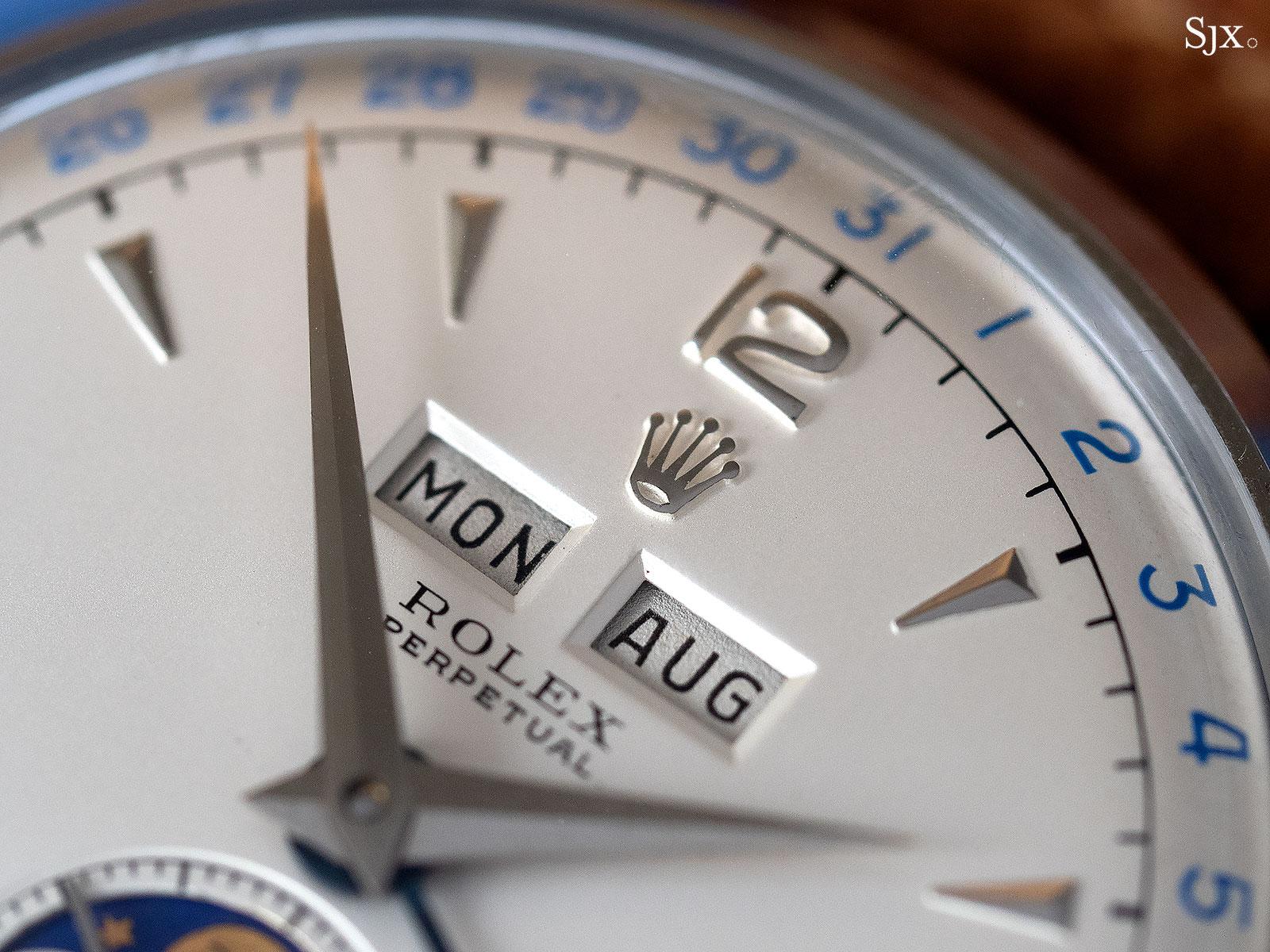
The original Rolex reference 8171 appeared around 1949 and measured about 38mm, which was a substantial watch for its time. It had a wide, relatively flat case and a thin bezel, giving it a very different look from the smaller dress watches that were common during the period.
Italian vintage-watch dealers eventually gave it the Padellone nickname.
The reference 8171 was also a triple-calendar moonphase watch, displaying the day, date, month and moonphase. It was discontinued in the early 1950s, and Rolex moved away from this type of complicated calendar watch for decades.
That makes the new model more than a random historical reference.
Rolex has essentially taken one of its more unusual vintage ideas and brought it back in a completely modern form.
For anyone interested in vintage Rolex, that connection is probably more meaningful than the complicated specification list itself.
The 1908 Was Ready for Something More Complicated
The timing also makes sense.
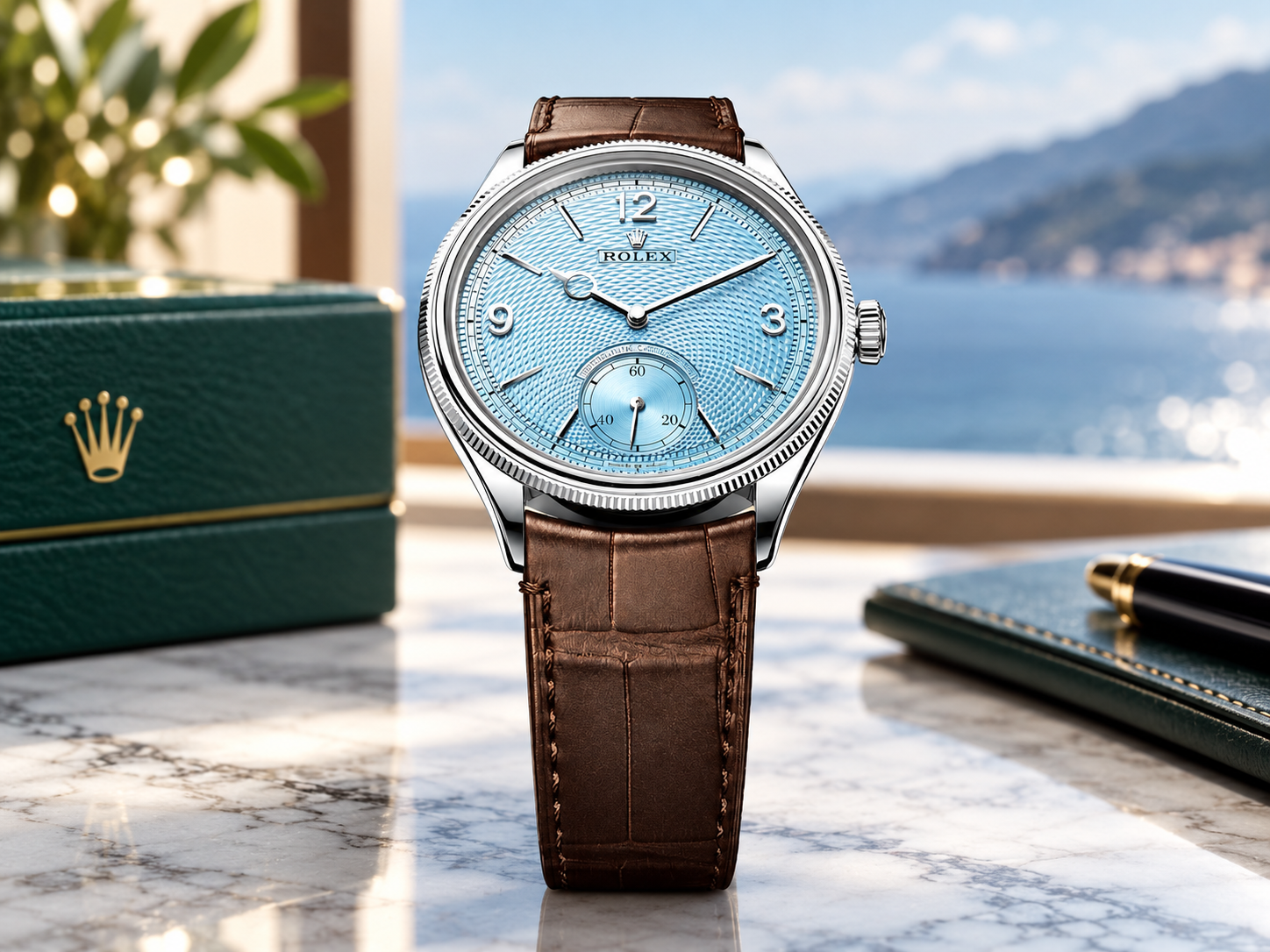
Rolex introduced the 1908 in 2023 as a new generation of traditional dress watch. It replaced the Cellini in Rolex’s lineup and brought the brand back toward a cleaner, more classical design.
The basic 1908 is deliberately simple: hours, minutes, seconds and date, depending on the version.
That simplicity works.
But it also gives Rolex plenty of room to build something more complicated without completely changing the character of the collection.
That’s exactly what happened with the Padellone.
The case remains at 39mm, the curved lugs remain, and the distinctive double-bezel design is still there. From a distance, you can recognize the 1908 family immediately.
Look at the dial, though, and the difference is obvious.
What Does the Annual Calendar Actually Do?
This is probably the most useful part to understand before getting distracted by the moonphase.
A normal date watch assumes that every month has 31 days. It doesn’t know that April has 30 or that February is shorter, so the wearer has to correct the date when necessary.
An annual calendar is smarter.
The Padellone can distinguish between months with 30 and 31 days. Under normal circumstances, the wearer only needs to correct it once a year, when February ends and March begins.
That’s a genuinely useful complication.
It isn’t something that makes the watch more impressive in a product photograph, but it changes how the watch behaves in everyday use.
Rolex has also designed the calendar to change instantaneously at midnight. The day, date and month switch over together rather than slowly creeping into position.
For a mechanical-watch enthusiast, small details like this are often more satisfying than the headline specifications.
Then There Is the Moonphase
The moonphase is probably what most people will notice first.
And I think Rolex made an interesting decision here.
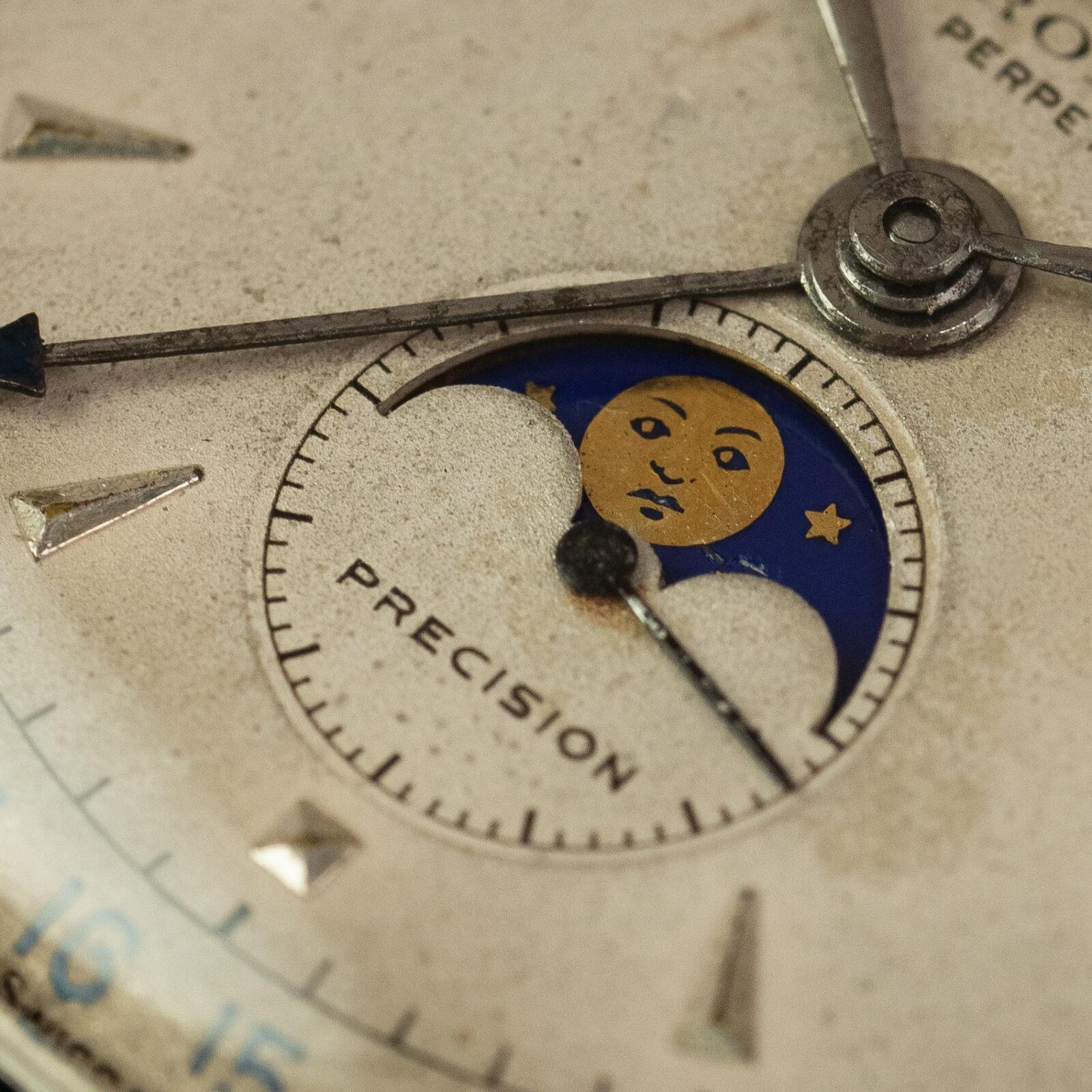
Instead of hiding part of the moonphase disc behind a conventional aperture, the Padellone displays the entire disc. You can see both the full-moon and new-moon representations.
The moon discs are made from meteorite, while the new-moon section receives a dark blue PVD treatment. The surrounding blue section is decorated with stars, giving the display much more visual depth than a simple printed moonphase.
The mechanism also isn’t just decorative.
The moonphase display follows the lunar cycle at approximately 29.53 days and is designed to remain remarkably accurate over a very long period.
Of course, almost nobody buys a watch like this because they desperately need to know the current phase of the moon.
That’s not really the point.
The moonphase gives the dial a focal point and, more importantly, makes the Padellone feel like a traditional complicated watch rather than simply a more expensive 1908.
Rolex Had to Completely Rework the Dial
Adding a calendar and moonphase to a 39mm watch isn’t as simple as adding a few windows.
The original 1908 has a lot of empty space compared with the Padellone. That space gives the basic model its elegance.
The new watch has much more information to organize.
Rolex places the day and month displays beneath 12 o’clock. The date is handled differently, with numbers from 1 to 31 printed around the outside of the dial and a blue crescent-tipped hand pointing to the current date.
That leaves the center of the dial relatively clean.
It’s a smart choice.
If Rolex had added another subdial for the date, the watch could have become visually crowded very quickly. The pointer-date arrangement keeps the main dial open while still providing the information.
The moonphase then takes over the position where you would normally find the small seconds on the simpler 1908.
Everything has a reason.
That’s something I appreciate about this watch.
The 39mm Case Is More Important Than It Looks
A 39mm case may not sound particularly interesting in 2026, but I think it is one of the better decisions Rolex made here.
The Padellone has a lot going on mechanically, yet Rolex didn’t respond by making the watch enormous.
At 39mm, it stays within the proportions expected from a traditional dress watch.
The case has the same rounded character as the 1908, with curved lugs and a double-bezel arrangement consisting of a domed upper section and a fluted lower portion.
This is a very different approach from a Rolex Submariner or GMT-Master II.
Those watches are designed around strong, functional shapes. The Padellone is much softer.
That difference is worth remembering when comparing Rolex models, and it is especially useful when looking at Replica Rolex watches. A replica can have the correct diameter on paper and still look noticeably wrong if the case shape, lug profile or bezel proportions are off.
With a watch this dressy, proportions matter a lot.
The Dial Colors Keep Things Relatively Restrained
Rolex introduced the Padellone in three versions: two in Everose gold and one in platinum.
The Everose versions use white dials, while the platinum model gets Rolex’s familiar ice-blue dial.
The dials have a textured finish rather than looking completely flat. The outer date track is raised and satin-brushed, creating another layer of contrast.
This is one of those details that photographs don’t always capture very well.
When looking at a Replica Rolex Padellone, I would pay attention to the texture rather than simply asking whether the dial is “white” or “blue.” The quality of the surface, the sharpness of the printing and the transition between the central dial and outer date track can have a much bigger effect on the overall appearance.
The same applies to the hands.
The minute hand has a sword-like shape, while the hour hand has a more traditional Breguet-inspired appearance. The pointer-date hand is blue and finished with a crescent tip.
Those details give the watch much of its personality.
Inside Is Where Things Get Really Interesting
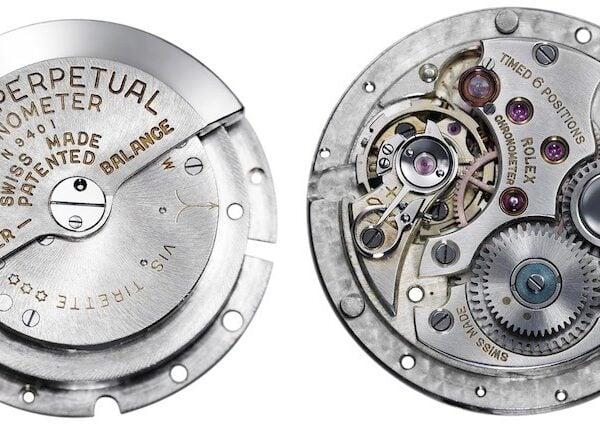
The new Padellone uses Rolex Calibre 7190.
It operates at 36,000 vibrations per hour, or 5Hz, which makes it a relatively high-frequency automatic movement.
It also incorporates Rolex’s silicon Syloxi hairspring, ceramic balance components and the company’s Dynapulse escapement architecture.
The movement has a stated power reserve of approximately 66 hours.
The Dynapulse system is particularly interesting because Rolex is attempting to reduce friction and improve the efficiency of the energy transfer to the balance.
For most buyers, though, I wouldn’t make the movement the only reason to care about this watch.
The more important question is what this movement architecture means for future Rolex models.
Rolex tends to introduce technical developments gradually. If this type of high-frequency architecture starts appearing elsewhere in the collection, the Padellone could end up looking like an early example of a larger change rather than an isolated experiment.
Padellone vs. Sky-Dweller
There is an obvious comparison with the Sky-Dweller because both watches use an annual calendar.
But they’re actually very different watches.
The Sky-Dweller combines its annual calendar with a second time zone and uses the Ring Command bezel as part of its operating system.
The Padellone doesn’t try to do all of that.
It is smaller, more traditional and much more focused on the calendar and moonphase.
The Sky-Dweller feels like a complicated modern Rolex.
The Padellone feels like Rolex looking backward at traditional Swiss watchmaking and asking how that idea could be rebuilt today.
That distinction matters.
What Should Replica Rolex Buyers Look At?
This is where the Padellone becomes particularly interesting from a Replica Rolex perspective.
Not everyone shopping for a Rolex-style watch is buying it for the same reason.
Some people care primarily about the overall appearance. Others care about movement architecture, finishing or how closely the watch reproduces the original.
For a complicated watch like the Padellone, I’d start with the visual details.
Case proportions should come first. Don’t rely only on the stated 39mm diameter. Look at thickness, lugs and the relationship between the bezel and case.
Dial layout is equally important. The two calendar windows, peripheral date scale and moonphase need to look properly spaced.
Hands are easy to overlook in product photos, but they are one of the quickest ways to change the character of a watch.
Moonphase quality matters because it sits in one of the most visible areas of the dial.
And finally, look closely at dial finishing and printing. Complicated dials leave very little room for sloppy details.
This is why I wouldn’t judge a Replica Rolex model purely from a product title such as “automatic movement” or “sapphire crystal.” Those specifications tell you something, but they don’t tell you how convincing the finished watch will look.
Photos, dimensions and close-up details are much more useful.
Is the Padellone a Sign of More Complications to Come?
Maybe.
But I wouldn’t make any big predictions yet.
The 1908 is still a relatively young collection, and the Padellone is already a significant step away from the simple dress-watch formula that introduced it.
What we can say is that Rolex now has a modern platform for more traditional complications.
That’s interesting because the brand has historically been much more associated with robust everyday watches than with complicated dress watches.
The Cellini collection experimented with different complications in the past, but the 1908 has a much clearer Rolex identity.
If Rolex continues expanding the collection, we could eventually see the 1908 become the company’s main home for traditional calendar and astronomical complications.
Or the Padellone could remain an unusual one-off.
For now, there isn’t enough evidence to know.
The Bigger Picture
The Perpetual Padellone isn’t going to replace the Submariner or Datejust, and it isn’t supposed to.
Its importance is elsewhere.
It shows that Rolex is willing to take a relatively traditional design, connect it to an obscure piece of its own history and then develop a completely new mechanical solution around it.
That’s a much more interesting story than simply releasing another color combination.
And for people who follow Replica Rolex, the watch provides another useful reminder: Rolex design isn’t only about the crown logo or the model name.
Case shape, dial proportions, hands, finishing, typography and small functional details all contribute to the identity of a watch.
Those are the things worth studying when comparing an original Rolex with a replica version.
The Padellone may be an unusual Rolex, but that’s exactly why it’s worth paying attention to.
After years of seeing the brand refine familiar formulas, it’s refreshing to see Rolex make a complicated watch that feels genuinely different – while still looking like it belongs in the family.